

Carriage House Apartments: Quick Start Guide


.svg)
What Are Carriage House Apartments? A Quick Overview
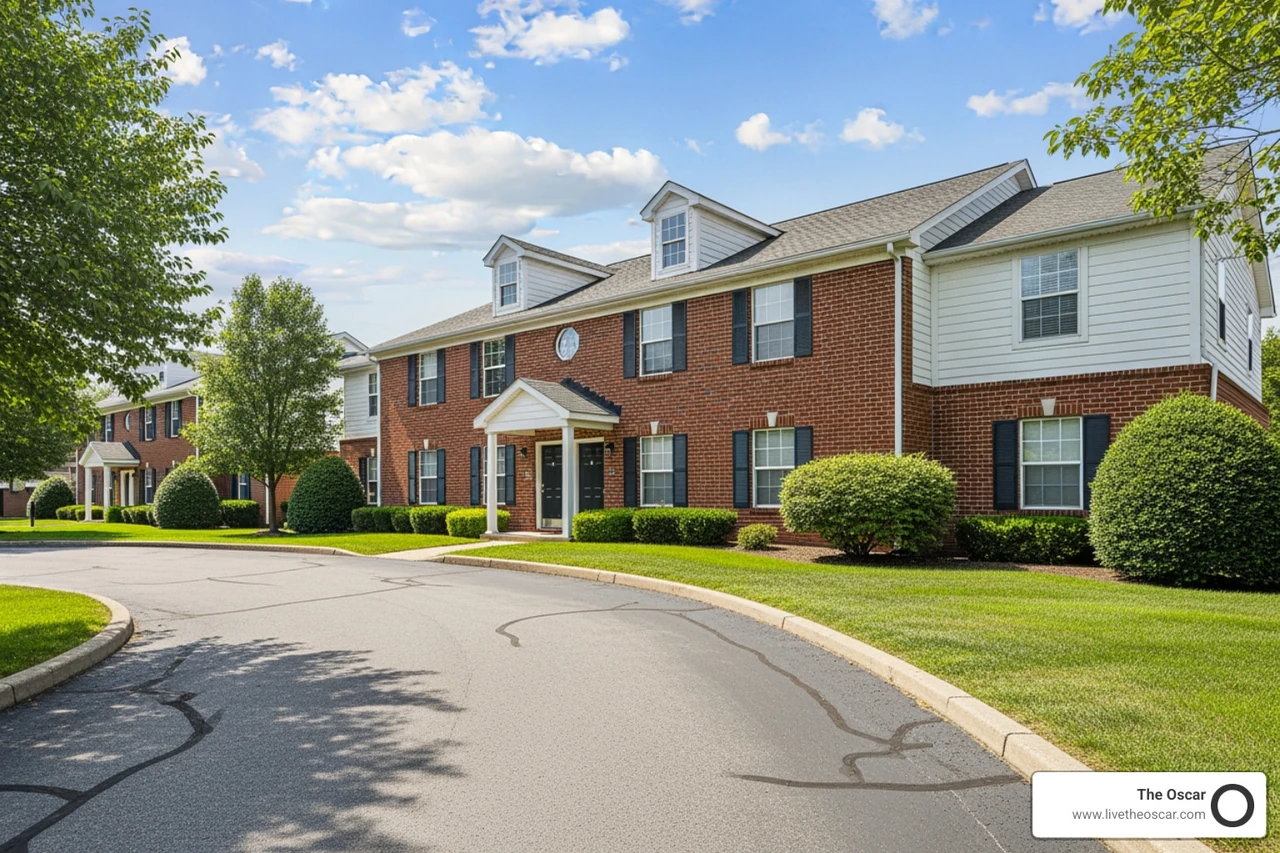
Carriage house apartments are a distinct rental style born from a simple idea: convert the detached outbuildings of historic estates — once used to house horse-drawn carriages — into livable, often architecturally rich homes.
Today, the term covers a wide range of rental styles, from standalone converted structures to full apartment communities inspired by that same detached, low-density character.
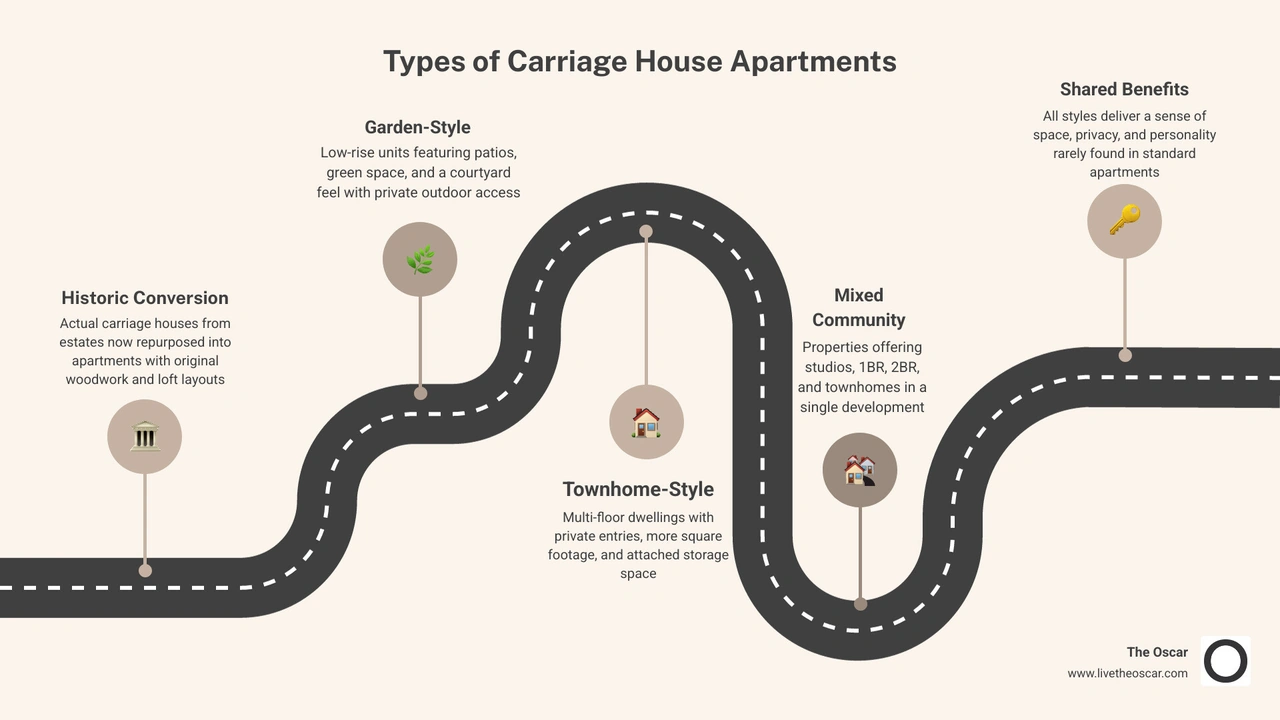
Here's a quick breakdown of what you'll find:
| Type | Description | Common Features |
|---|---|---|
| Historic conversion | Actual carriage house repurposed as apartment | Original woodwork, loft layouts, unique architecture |
| Garden-style community | Low-rise units with outdoor access | Patios, green space, courtyard feel |
| Townhome-style | Multi-floor units with private entry | More square footage, attached storage |
| Mixed community | Several unit types in one property | Studios, 1BR, 2BR, townhomes |
These properties exist across the U.S. — from urban neighborhoods in Philadelphia to communities in Las Vegas and beyond. Some are historic gems. Others are newly renovated communities that simply carry the name and spirit of that detached, character-driven style.
What they share: a sense of space, privacy, and personality that standard apartment buildings often lack.
What Are Carriage House Apartments?
At the broadest level, carriage house apartments are homes inspired by buildings that originally supported a main residence. Historically, a carriage house sat apart from the primary home and stored carriages, tack, or staff quarters. In modern rental housing, that idea has evolved into several formats:
- detached or semi-detached dwellings
- garage-inspired homes or lofts
- cottage-style residences
- townhome-style apartments with private entries
- low-rise communities designed to feel less dense than a conventional apartment block
- adaptive-reuse residences created from older structures
That means the phrase does not always describe one exact floor plan. Instead, it often signals a certain feel: more architectural character, more separation from neighbors, and less “long hallway with twenty matching doors.”
How carriage house apartments differ from standard apartments
Compared with a typical apartment community, carriage house apartments often stand out in a few ways:
- Separate entrances are common.
- Layouts may be less boxy and more flexible.
- Buildings are often lower density.
- Outdoor access can feel easier and more direct.
- The overall design may lean cottage-like, townhome-like, or historic rather than purely utilitarian.
In plain English: they tend to feel a little more personal. Not every one comes with storybook charm, of course, but many do offer a more distinctive living experience than a standard stacked unit in a large complex.
Common forms you'll see today
Modern carriage house apartments usually fall into these categories:
- Garden-style units with patios or balconies
- Townhomes with multiple floors
- Renovated historic buildings with original details
- Courtyard units arranged around shared outdoor space
- Mixed communities that combine studios, one-bedrooms, and larger homes
Some communities use the “carriage house” name because the architecture or layout evokes that detached, classic look. Others are true conversions of older carriage buildings.

Finding Carriage House Apartment Communities in Philadelphia
Philadelphia is one of the clearest examples of how the carriage house concept fits modern urban living. In that market, the style often combines historic context with updated interiors and strong walkability.
For readers researching urban carriage house living, New Apartments Near UPenn & Drexel | Carriage House is a useful example of how the concept appears in a university-adjacent neighborhood.
| Feature to Compare | What Philadelphia Examples Highlight | Why It Matters |
|---|---|---|
| Neighborhood setting | University City and West Philadelphia context | Strong transit and walkability |
| Floor plans | Studios through two-bedrooms | Flexible options for different household sizes |
| Building style | Historic character with renovations | More personality than a generic mid-rise |
| Amenities | Fitness, lounge, BBQ area, conference space | Supports work, study, and everyday living |
| Resident services | Online payments and maintenance requests | Easier day-to-day management |
Carriage house style living in University City
One reason carriage house apartments get attention in Philadelphia is that they fit naturally into older, layered city neighborhoods. The style pairs well with areas where architecture matters and where residents want both charm and convenience.
In neighborhoods near major institutions, carriage house living often appeals to people who want:
- quick access to campus or work
- a more distinctive setting than a standard student-style building
- renovated interiors within an established neighborhood
- transit access and strong walkability
- nearby dining, parks, and daily essentials
That mix is hard to beat. You get city energy without giving up all sense of individuality.
Specialized property features
Philadelphia-area carriage house communities often highlight a blend of old and new, such as:
- historic architectural character
- renovated kitchens and baths
- elevators in larger buildings
- fitness rooms
- conference or study areas
- lounges and social spaces
- pet-friendly policies
- digital resident tools for rent payments and service requests
This is one of the biggest strengths of the category: the “carriage house” label may suggest old-world charm, but many properties pair that with modern convenience.
Floor Plans, Unit Sizes, and Interior Features
One of the most practical questions renters ask is simple: what do carriage house apartments actually look like inside?
The answer varies more than with many other rental categories. Research across U.S. properties shows that carriage house apartments can range from compact efficiency layouts to multi-bedroom townhomes.
Typical floor plans at carriage house apartments
Across the broader market, common options include:
- studio layouts
- efficiencies
- one-bedroom apartments
- two-bedroom apartments
- loft-style units
- cottage plans
- townhomes
- mixed-layout communities with several unit types in one place
Some urban examples offer 0- to 2-bedroom layouts, while suburban carriage house communities may go larger with one-, two-, and three-bedroom homes, including townhome-style options.
This flexibility is part of the appeal. A “carriage house apartment” is more of a design family than a single template.
Size ranges and in-home features
The research shows a fairly wide size spread:
- some one-bedroom examples are around 700 square feet
- one community in Philadelphia lists homes from 721 to 1,236 square feet
- a Las Vegas example includes one-bedrooms around 800 square feet and two-bedrooms around 990 square feet
- some townhome-style plans exceed 1,000 square feet
Typical in-home features include:
- fully equipped kitchens
- dishwashers
- central heating and air
- private patios or balconies
- large closets
- in-home or select-unit washer/dryer setups
- additional storage
- renovated finishes in updated communities
In historic conversions, layouts may be more unconventional. You might see lofted sleeping areas, angled ceilings, former hayloft-style open rooms, or original architectural details worked into a modern plan. That can be a huge plus if you want a home with personality. It can also mean you should study the floor plan carefully rather than assuming every room is perfectly rectangular and predictable.

Amenities, Services, and Resident Experience
Amenities at carriage house apartments vary widely because the category includes everything from a single historic conversion to a larger managed community.
Still, several patterns show up again and again.
Common amenities residents can expect
In community-style carriage house apartments, common amenities often include:
- swimming pool
- fitness center or gym
- grilling or BBQ areas
- lounge or clubhouse
- playground in family-oriented communities
- dog park in some suburban properties
- balconies or patios
- laundry rooms or multiple on-site laundry areas
- gated entry at some locations
- elevator access in larger buildings
- carports, garage spaces, or off-street parking
Pet policies vary, but many carriage house communities are pet-friendly. Before applying, always confirm breed restrictions, deposits, monthly pet charges, and the maximum pet allowance. A good rule of thumb is to verify the community's limit and assume no more than two pets per apartment unless the lease clearly says otherwise.
Utilities, maintenance, and digital resident services
Resident services are a major differentiator. Some properties are old in origin but modern in operation, which is honestly the dream. Historic charm is lovely; mailing checks and waiting three weeks for a callback is less lovely.
Features that show up in current carriage house communities include:
- resident portals
- online rent payments
- online maintenance requests
- account management tools
- on-site management
- 24/7 maintenance at some communities
- security cameras in select properties
- utility packages or partially included utilities in some leases
Utilities differ by property. In the research, examples ranged from communities that include basic services like water, sewer, and trash to individual carriage house rentals that bundle internet, heat, gas, and air conditioning. Because this varies so much, it is one of the most important items to confirm in writing before signing.
Standout features that make properties unique
This is where carriage house apartments get interesting.
Depending on the property, standout features may include:
- preserved original woodwork
- unusual loft layouts
- carriage-building architecture
- private hot tubs in short-term or specialty rentals
- EV charging
- conference rooms and study areas
- newly renovated interiors
- private courtyards
- wine cellars in rare historic accommodations
- garage or carport parking
And for renters who love modern amenity packages in an urban setting, we see a natural overlap between the carriage house ideal and what residents now want most: character plus convenience. At The Oscar, our approach to elevated urban living in Las Vegas reflects that same spirit of distinctive design, updated comfort, and amenity-rich daily life, with features like a golf simulator, yoga studio, co-working space, and dog run planned for our seven-story community opening in 2028.
How to Compare Lease Options, Policies, and Neighborhood Benefits
If you are comparing carriage house apartments, focus less on the name and more on the structure of the offer. Two places with nearly identical branding can operate very differently.
Lease structures, deposits, and common policies
Research across carriage house properties shows that lease and policy details commonly vary in these areas:
- lease length, often 6- or 12-month structures
- security deposits
- application fees
- parking arrangements
- utility responsibilities
- pet fees and pet rent
- move-in specials
- smoking restrictions
- quiet hours in some historic or short-stay properties
- occupancy and guest rules
Even if a property has beautiful architecture, the practical details matter just as much. Ask for a current fee sheet and a sample lease if available. Confirm:
- which utilities you pay directly
- whether parking costs extra
- what maintenance response process looks like
- how service requests are submitted
- whether renters insurance is required
- whether balcony, patio, or storage rules apply
- pet limit and related fees
Neighborhood highlights to evaluate before you apply
Neighborhood value is a major part of the carriage house appeal. Because these properties often emphasize charm, lower density, or historic context, the surrounding area can shape the experience just as much as the unit itself.
When evaluating a location, look at:
- proximity to work or school
- access to transit
- nearby shopping and dining
- parks and trails
- access to medical centers
- business corridors and commute routes
- walkability and bike access
- whether daily errands can be handled without long drives
For Las Vegas renters, this is especially relevant in areas like Downtown Las Vegas and the Medical District, where residents may want a balance of urban access and comfortable private living. At Alta Drive and S Tonopah Drive, location matters because convenience matters. A great apartment is better when coffee, work, wellness, and everyday errands do not feel like a full expedition.
Who carriage house communities may suit best
Depending on layout and location, carriage house communities may work especially well for:
- students who want access to campus and study-friendly amenities
- young professionals who value walkability and online resident tools
- households seeking townhome-style living
- renters who want more architectural character
- residents who prefer a smaller-scale or lower-density feel
- people looking for a mix of historic style and modern interiors
Not every carriage house apartment will fit every renter. A historic conversion may charm one person and confuse another who just wants straight walls and obvious closet space. It is all about matching the layout and building style to how you actually live.
Frequently Asked Questions About Carriage House Apartments
Are carriage house apartments usually detached or part of a larger community?
They can be either. Some are truly detached units, often converted from historic outbuildings. Others are part of larger apartment communities that borrow the carriage house idea through townhome sections, private-entry homes, or low-rise layouts.
So if you are hoping for total stand-alone living, check the site plan. “Carriage house” sometimes means detached, but not always.
What amenities are most common at carriage house apartment communities?
The most common amenities in the research include:
- fitness centers
- swimming pools
- laundry facilities
- parking options such as carports or garages
- patios or balconies
- grilling areas
- lounges or clubhouses
- pet-friendly policies
- resident portals for online payments and maintenance
Historic single-building or short-stay carriage houses may offer a different mix, with more emphasis on architecture and in-home features than large shared amenity packages.
What should you confirm before signing a lease?
Before signing, confirm all of the following:
- lease term
- security deposit
- application fees
- utility responsibilities
- maintenance process
- parking setup
- pet policy, including a maximum of two pets if allowed
- rules for smoking, balconies, patios, or shared spaces
- whether online payments and service requests are available
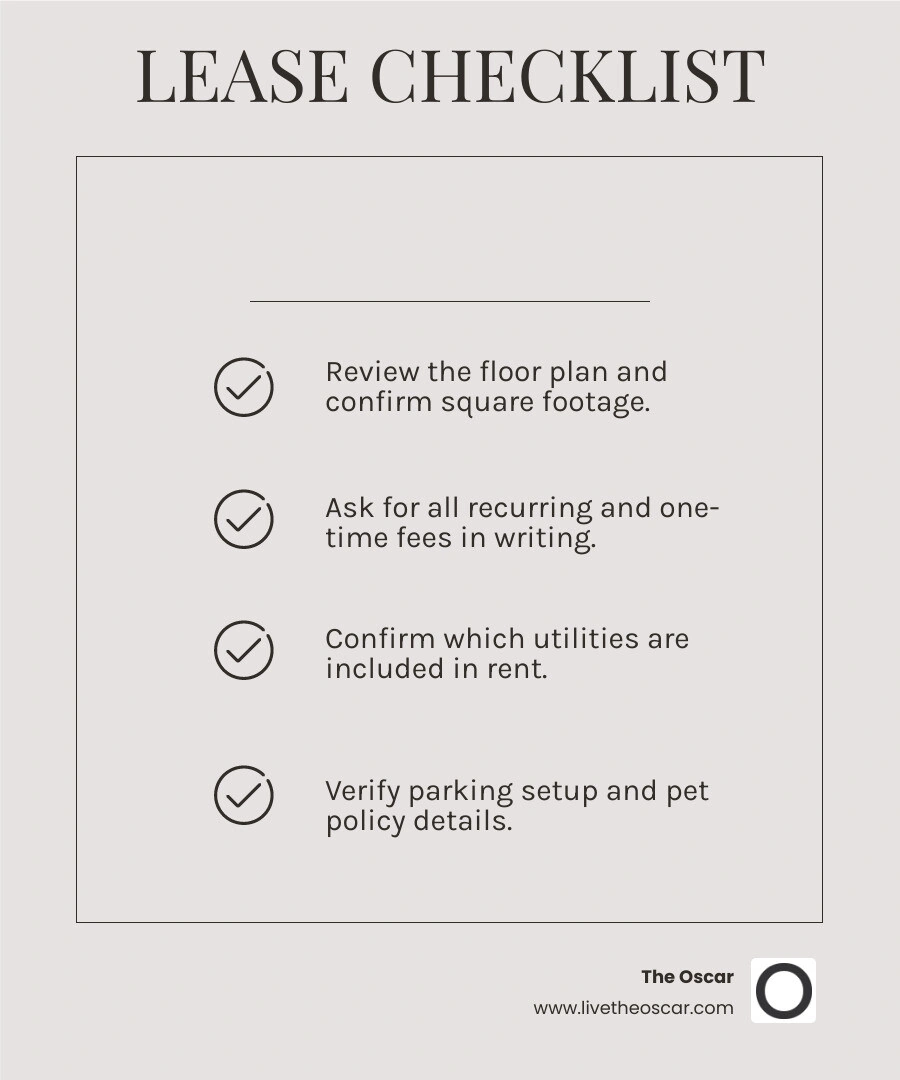
A simple checklist can save a lot of stress later:
- Review the floor plan carefully.
- Ask for all recurring and one-time fees in writing.
- Confirm included utilities.
- Verify parking details.
- Read the pet addendum.
- Test the resident portal if one is offered.
- Walk the neighborhood at different times of day.
Conclusion
Carriage house apartments are not one-size-fits-all rentals. They can be historic conversions, private-entry townhomes, garden-style residences, or mixed communities with a more distinctive, low-density feel than a standard apartment building.
What makes them appealing is the combination of character and livability:
- more unique layouts
- stronger architectural identity
- useful amenities in many communities
- flexible floor plan options
- neighborhood-driven lifestyle benefits
When comparing your options, focus on the details that shape day-to-day life: layout, resident services, utilities, maintenance, parking, pet rules, and the surrounding neighborhood.
And if you are exploring elevated urban apartment living in Las Vegas, we invite you to see how our approach combines modern convenience, thoughtful design, and standout amenities. Learn more at New Apartments Near UPenn & Drexel | The Oscar.

Related Posts

CONTACT US
Everything starts with hello. Fill out the form below to stay in the loop with updates on The Oscar.
.jpg)